
Fire safety is a core reason owners choose concrete. Precast concrete is noncombustible: it does not burn, does not add fuel to a fire, and does not release toxic smoke. Here is how precast contributes to fire safety and how fire-resistance ratings are achieved.
Noncombustible vs. fire-resistance rated
These two terms are often confused. Noncombustible means the material does not ignite or burn. Fire-resistance rating measures how long an assembly, such as a floor or wall, keeps its strength and stops flame and heat from passing through when tested under standard fire conditions. Ratings are stated in hours.
What determines a rating
- Thickness: More concrete means more time for heat to pass through.
- Cover over reinforcement: Concrete cover protects steel strands and bars from heat.
- Aggregate type: Some aggregates perform better in fire than others.
- Toppings: A concrete topping on hollow core can increase the effective thickness.
- Support conditions: How members are restrained and connected affects performance.
- Protection of connections: Exposed steel connection hardware may need protection, depending on the required rating.
Typical ratings
Precast floors, roofs and walls can be designed to achieve fire-resistance ratings that commonly range from one hour up to four hours, depending on the member and the details. Confirm the rating for a specific assembly using published tests, listed assemblies or engineering calculations accepted by the authority having jurisdiction.
Benefits for building owners
- Compartmentation: Concrete floors and walls help contain a fire to its area of origin.
- Structural integrity: Concrete retains strength well in fire, which helps protect occupants and firefighters.
- No added protection layers: Rated performance is often built into the member itself rather than added with spray or board.
- Insurance and code advantages: Noncombustible construction can offer design flexibility under building codes and may influence insurance costs. Check with your insurer and code consultant.
Where it matters most
Fire performance is especially important in multifamily housing, hotels, schools, healthcare and correctional facilities. See how precast serves these markets in our building types.
Design tips
- Identify required ratings early, since they affect thickness and detailing.
- Coordinate penetrations for pipes, ducts and wiring with fire-stopping requirements.
- Use tested or listed assemblies whenever possible.
- Ask the producer to confirm ratings for the specific members you select.
Technical resources
Our technical articles include fire-rating guidance from Coreslab plants. For project-specific questions, contact the nearest Coreslab plant.
This article is general information, not engineering or code advice. Fire-resistance ratings must be verified by a licensed professional and the authority having jurisdiction.
FAQ
Frequently asked questions
Is precast concrete fireproof?
Concrete is noncombustible and has excellent fire resistance, but no material is completely fireproof. Ratings describe how long a tested assembly performs in a standard fire.
What fire rating does hollow core have?
It depends on thickness, cover, topping and details. Common ratings range from one to four hours.
Does fire damage precast concrete?
Severe fires can damage the surface and, in extreme cases, reinforcement. Structures should be inspected by an engineer after a fire.
Featured projects
Precast solutions in action
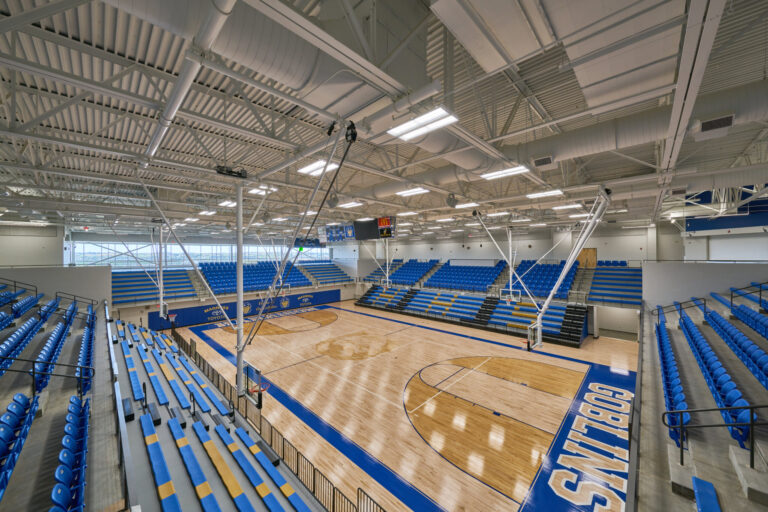 Harrison High School Gym – Harrison, AR
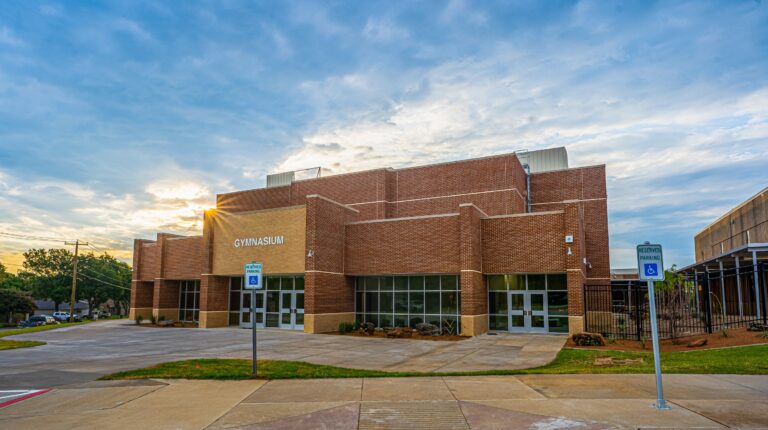 Smithfield Middle School – Gymnasium Addition – North Richland Hills, TX
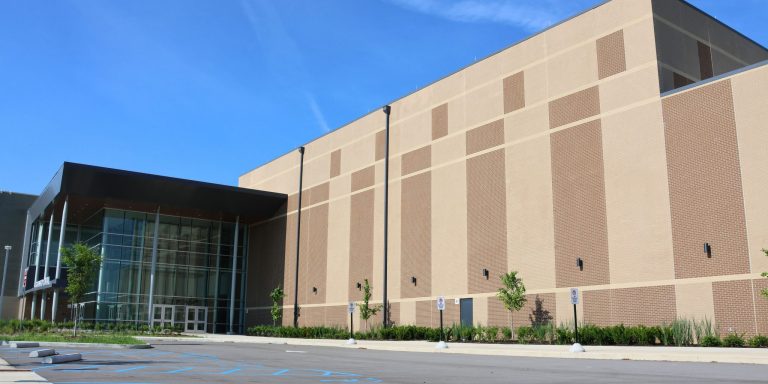 Greenfield Central High School Auditorium – Greenfield, IN
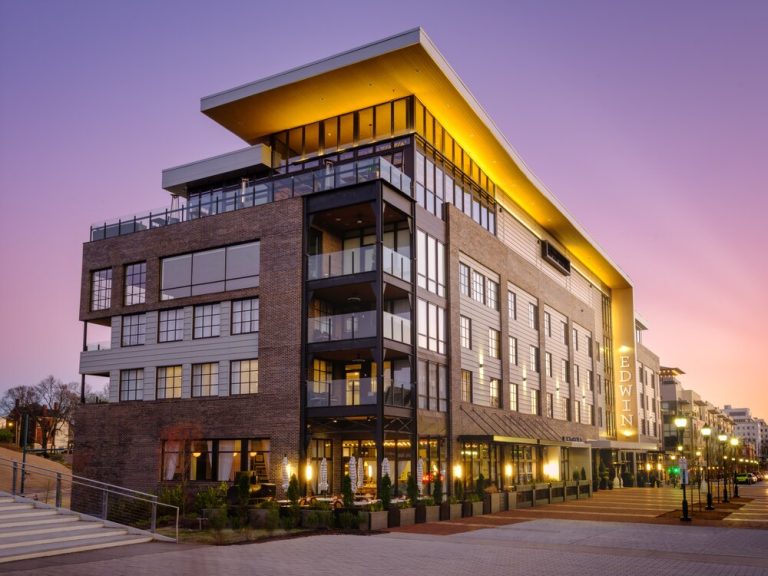 The Edwin Hotel – Chattanooga, TN
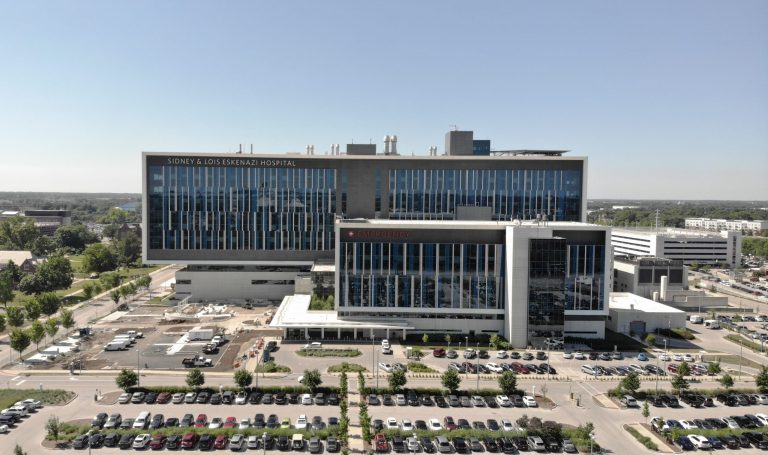 Sidney & Lois Eskenazi Hospital – Indianapolis, IN
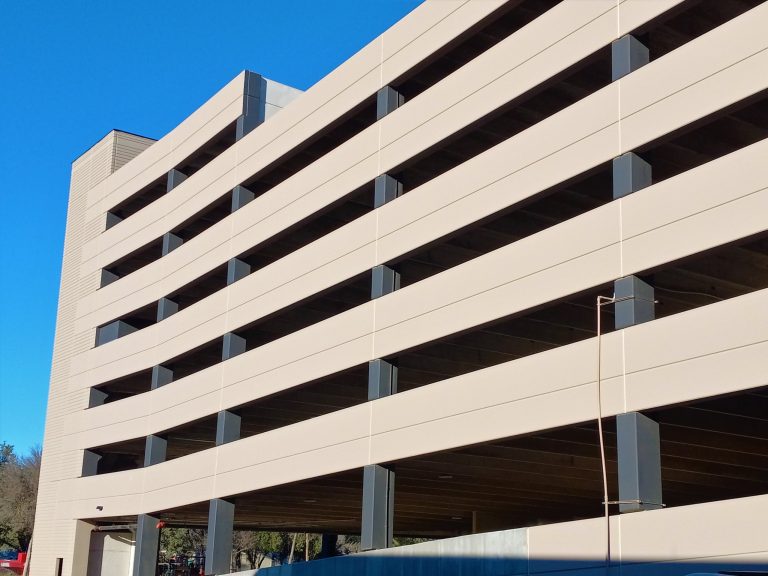 Texas Children’s Austin North Hospital & Garage – Austin, TX