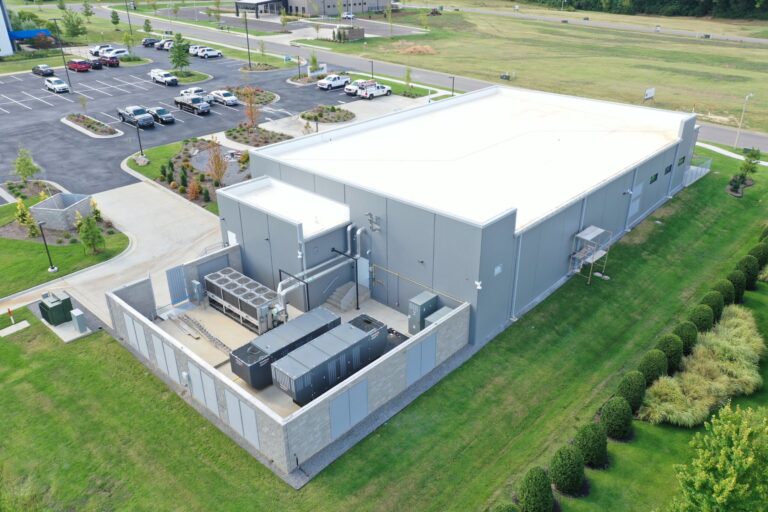
A precast data center shell is largely decided before the first panel is cast. Panel size, openings, finishes, connections and the order of erection all shape how the plant builds its forms and how the crew sets the pieces. Settling them early is what keeps casting and erection moving together.
Our plants have worked through these decisions on data center projects including VCN 3-6 in Los Lunas, New Mexico, and the Ritter Communications Data Center in Jonesboro, Arkansas. These are the questions we would put on the table first.
Start with the panel module
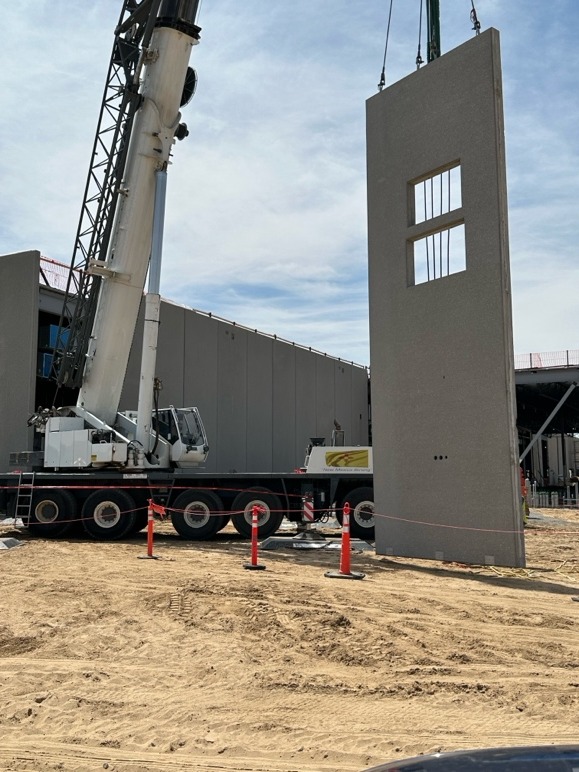
Panel width and height set the crane, the trucking and the number of pieces. At VCN 3-6 the wall panels are 10 ft wide and between 32 ft 4 in. and 33 ft 5 in. tall, and the project used 319 of them. The largest pieces were 40 ft spandrels over the leave-out openings, each weighing 37,500 lb. A 400-ton crane set the panels, and more than 180 truckloads carried the precast from our Albuquerque plant to site.
Fix the openings before the forms are built
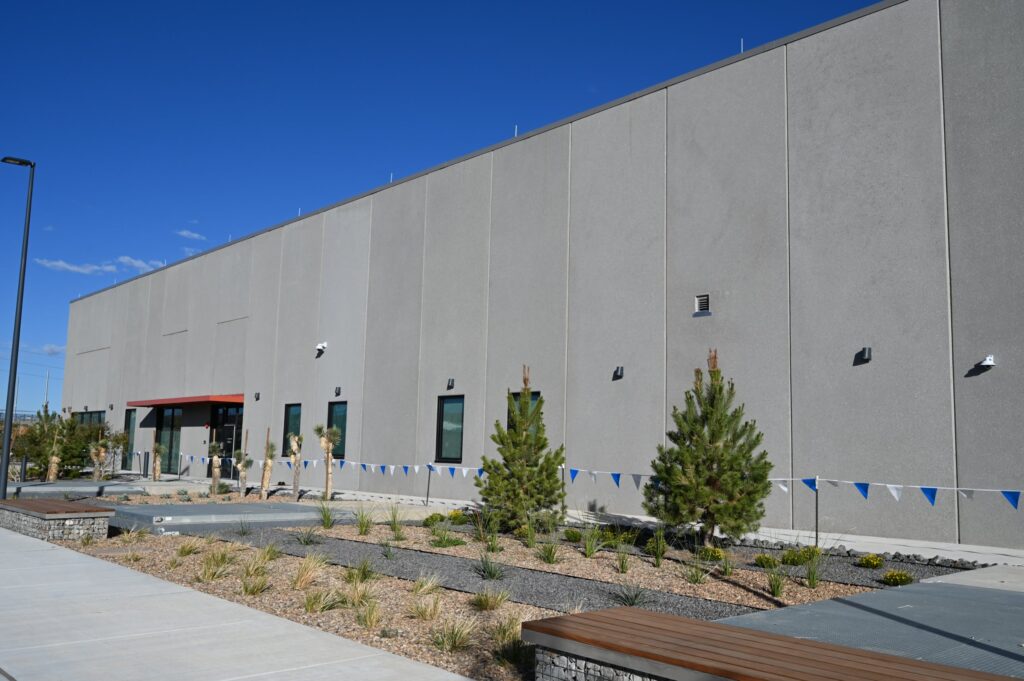
Louvers, doors and scuppers can be cast into the panel, so the plant needs their locations before it builds the forms. More than 100 panels at VCN 3-6 were cast with openings and penetrations, which means those details arrive on site already formed.
Choose the wall build-up
One common wall build-up is the insulated sandwich panel: an exterior layer of concrete, a layer of insulation and an interior layer of concrete, cast as one piece. At VCN 3-6 the panels are 10 in. thick, with a 3 in. exterior layer, 4 in. of Thermomass insulation and a 3 in. interior layer. Thickness and insulation drive panel weight, and weight drives connections and crane selection, so they belong in the first round of decisions.
Match the finish to the schedule
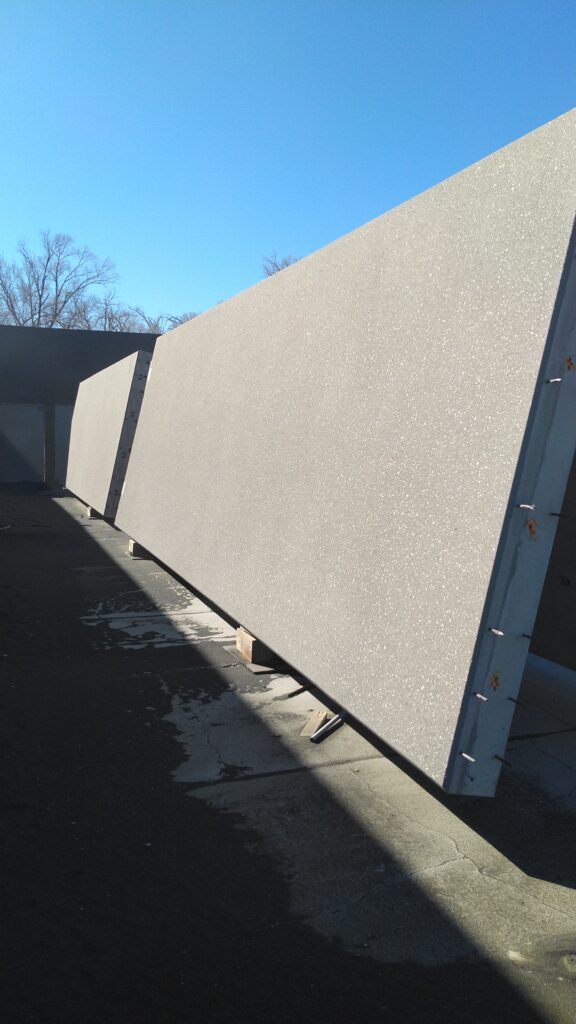
A finish is a design choice and a production choice. VCN 3-6 has a sandblasted exterior, and the blasting is done at the plant before panels ship, so casting had to stay two weeks ahead of each erection phase. At Ritter, form finishes painted in contrasting colors add depth and texture. Settling the finish early lets the plant plan its yard space and its casting sequence.
Agree the connections early
How a panel is carried and tied back is a structural engineering decision, and it affects what the plant casts into the panel. At VCN 3-6 the wall panels are non-load-bearing. Welded clips bear them on the grade beam, and slotted inserts with threaded rods tie them to the roof steel while allowing movement.
Plan the erection order with the casting order
Panels are cast in the order they will be set. VCN 3-6 was erected in four phases, each following the steel roof deck, starting in February 2025. The leave-out panels had to go in beneath 40 ft spandrels that were already set, so the precast engineer designed a custom handling rig that let the erector rotate each panel to near vertical under the spandrel and push it into place. Working out a sequence like that before casting starts is far cheaper than finding the problem with the crane on site.
Consider walls and structure from one supplier
Some buildings use precast for the frame as well as the envelope. At the Ritter Communications Data Center, completed in 2019, Coreslab supplied 44 insulated wall panels, 16 double tees and 2 flat slabs for a building designed to withstand 250 mph winds. When one precaster supplies both, one team settles how the walls and the structure fit together.
Bring the plant in early
Fourteen of Coreslab’s 17 plants serve data center projects, so a plant near your site can review your drawings and talk these decisions through with your design team. Send us your drawings or a project outline and we will respond with how precast could fit. You can also read more on our data center pages: Coreslab for data centers, envelope and structure and delivered projects, or contact the Coreslab plant nearest you.
FAQ
Frequently asked questions
Does precast concrete crack?
Are precast concrete walls load-bearing?
What are the benefits of using precast and prestressed concrete products?
Does Coreslab Structures provide engineering and design services?
Are Coreslab Structures products environmentally friendly?
Featured projects