Prestressed concrete is concrete that has been put into compression before it carries any load. That built-in compression lets the member resist bending, span farther and use less material than ordinary reinforced concrete.
The basic idea
Concrete is strong in compression but weak in tension. Reinforcing bar helps, but it does not engage until the concrete has already cracked. Prestressing solves this by compressing the concrete in advance, so that when load is applied it first relieves that compression rather than going straight into tension.
How prestressed precast is made
Most precast prestressed members are made by pretensioning:
- High-strength steel strands are stretched between the ends of a long casting bed and tensioned with hydraulic jacks.
- Concrete is placed around the stressed strands and cured, often with heat to speed up strength gain.
- When the concrete reaches the required strength, the strands are cut or released.
- The strands try to shorten, but they are bonded to the concrete, so they transfer force into it and compress it.
Why it matters
- Longer spans: Fewer columns and walls mean more flexible floor plans.
- Slimmer members: Less depth saves floor-to-floor height and material.
- Crack control: Compression keeps the concrete tighter under service loads, which supports durability.
- Efficiency: Less material and lower weight can reduce shipping, lifting and foundation demands.
- Consistency: Pretensioning relies on controlled plant production, which is where precast shines.
Where prestressed concrete is used
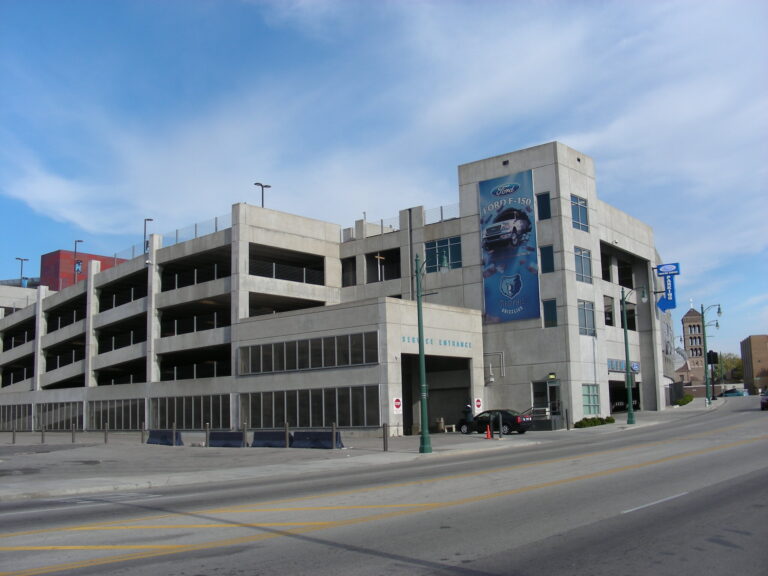
Prestressing is used in hollow core planks, beams, girders, columns, wall panels, bridge members, parking structure components and stadium seating. Many of the long-span parts of a precast structure are prestressed.
Prestressed vs. reinforced concrete
Reinforced concrete uses passive steel bars that carry tension after the concrete cracks. Prestressed concrete uses tensioned steel that actively compresses the concrete. Both are valid structural systems; prestressing generally offers more efficient long-span performance.
See prestressed products in action
Coreslab produces prestressed hollow core, beams and other members at plants across North America. Explore our structural precast products or browse technical articles from our engineers.
This article is general information, not engineering advice. Final design must be completed by a licensed engineer.
FAQ
Frequently asked questions
What is the difference between prestressed and precast concrete?
Precast describes where concrete is made, in a plant instead of on site. Prestressed describes how it is reinforced, with tensioned steel strands. Many precast products are both.
Is prestressed concrete stronger than regular concrete?
Prestressing increases the load a member can carry over a span and helps control cracking. The concrete mix itself may be similar.
What does pretensioned mean?
Pretensioned concrete is cast around strands that have already been tensioned, which is the method used for most precast prestressed products.
Featured projects